
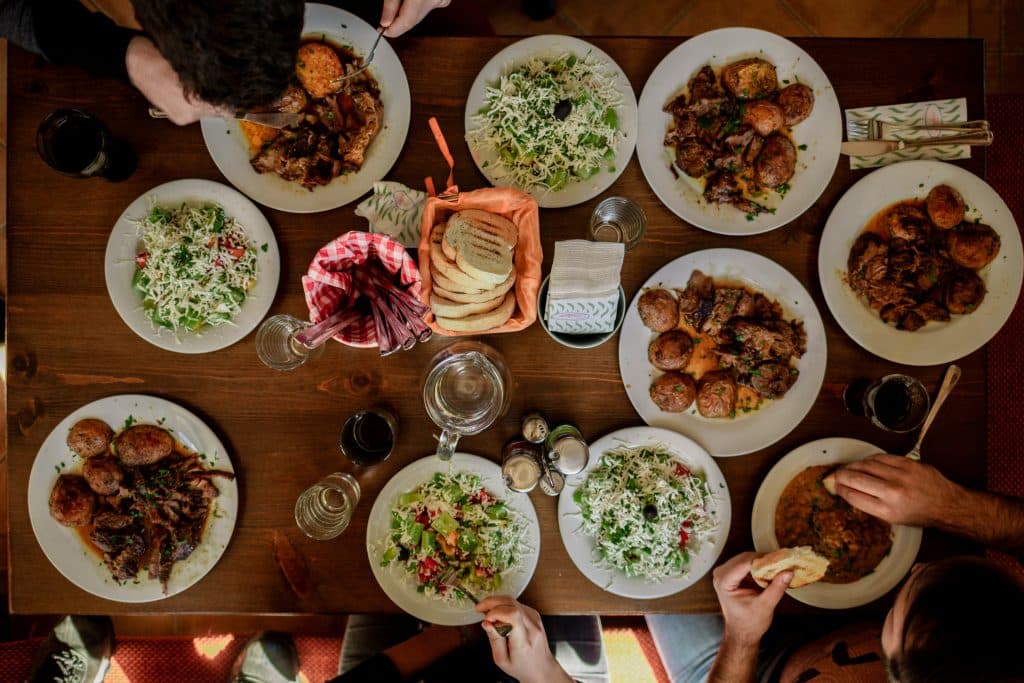
The plate’s still warm when someone asks it. Not “cómo estás,” not “cómo te ha ido,” straight to “y tu esposo, dónde está, por qué no viniste con él.” Como si el hombre fuera el boleto de entrada. Everyone at the table hears it. Nobody looks up except the person who asked.
You could laugh it off. A lot of us do, actually, we’ve had years of practice making the face that says I’m fine with this while something in your throat closes around it.
Or you say something back, something small, and now you’re the one who got defensive at Thanksgiving, or at whatever this gathering actually is for your family, because let’s be honest, not everybody’s sitting around a turkey. Some of us are eating tamales in December and calling it the same season.
It’s never really about the question. It’s about what you’re supposed to do with it once it’s already sitting on the table.
I remember being the girl who didn’t say anything about it when I saw other women be asked. Sixteen, maybe seventeen, fork halfway to my mouth, and act like that comment didn’t bother me.
You learn to do the math fast at that age, is this worth it, and the answer is almost always no. Not tonight. Not in front of everyone.
So you swallow it along with the food and you go home and you don’t think about it again. Only when you are on your way to the family gathering again or when ama asks “vamos con tu tia?” or maybe not until you’re setting the table for the same dinner fifteen years later and your own hands are doing something strange, shaking a little, and you don’t even know why yet.
Here’s the part that took me a while to actually sit with. A physical boundary, you can walk away from. Somebody goes in for a hug you didn’t want, you can step back, you can be “la mal educada” for one afternoon and survive it.
It’s already out. You said no. You said porqùe no quiero. You spoke up for yourself.
It’s sitting on the table next to the food now, and everyone heard it, and you can’t unspeak it, mija. You can only decide what you’re going to do with it.
We get told to have boundaries like it’s one skill, one shape. Like the hug and the comment live in the same body. They don’t. One you can control by moving your body. The other one, you carry.
Every boundaries workshop built for corporate breakrooms and friend group chats hands you the same five sentences and calls it universal. Nobody in those rooms is thinking about a tía who raised you, who’s also the one asking the question. There’s no clean script for setting a boundary with someone who changed your diapers and also doesn’t think you should have opinions about your own marriage.
I used to think the goal was learning not to feel it. Que se me resbalara, that it would just slide off. It doesn’t slide off. Years into this work and I still catch that same comment sometimes, still feel my stomach drop before my mouth catches up.
That’s not weakness. That’s a nervous system doing exactly what it was trained to do. A body that’s had to stay alert at every family table for thirty years doesn’t get to opt out just because I finally learned the right words for it. Discernment doesn’t erase the wiring. It just means I get to choose what happens next, instead of the wiring choosing for me.

Marianismo. La idea de que el valor de una mujer vive en la casa, se autosacrificia para su hogar y esposo, mantiene pureza de su cuerpo para dios y su esposo, y es sumisa en todos aspectos.
Learning the word didn’t change the question. It just meant I finally had somewhere to put it.
Because that question wasn’t invented at my table. Whoever’s asking it was probably asked the same thing, at their own table, by someone who’s gone now. Not always to hurt you. Just repeating the only script they got handed.
Doesn’t make it okay. Just makes it make sense, and some days that still doesn’t make it hurt less.
Whoever handed her that question was handed the same one herself, at her own table, from someone who’s already gone. Not a choice one person made on purpose. A frequency, passed hand to hand, generation to generation, nobody deciding one day to make a woman feel small. Just repeating the only ceremony they were ever taught.
That’s not an excuse. It’s just where the weight actually comes from, further back than any one dinner table, further back than any one comment. Which means the healing isn’t only mine to do alone either.
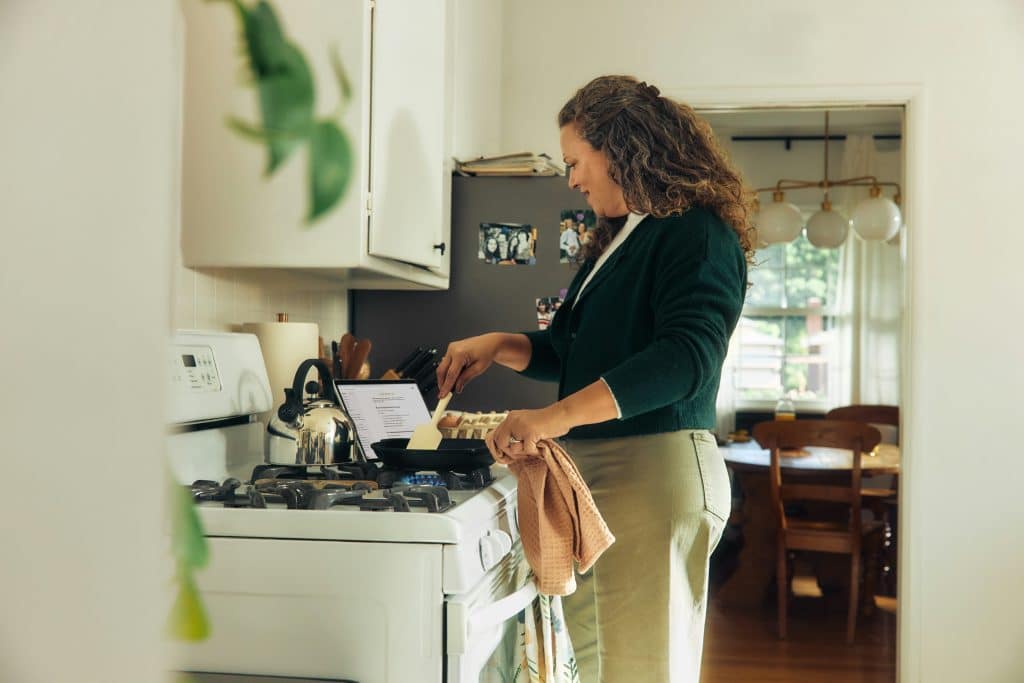
By the time I was setting that same table fifteen years later, my hands already knew something my head hadn’t caught up to yet. They weren’t just cold from the fridge, or nervous about hosting. They were carrying the whole weight of the question before it had even been asked out loud that year.
I know now what I didn’t back then, that I wasn’t scared of one comment. I was bracing for a script I’d been handed before I even knew what a script was, marianismo, a woman’s worth measured out in la casa, en la cocina, in how well she disappears into someone else’s needs. My hands weren’t shaking from nerves. They were shaking from carrying something that was never actually mine to hold alone.
Tía leans over and asks you about your esposo, then twists around not two minutes later and asks your cousin about her novio, like being unmarried is just a stage you’re supposed to be finishing. Then they talk about how sutanita ya esta embarazada y fulanita no a terminado la escuela y tiene 30 años.
Then, when your sister mentions a shift she picked up, someone mutters “trabajas todo el día, y tus hijos quien los cuida,” like clocking in makes her the one doing something wrong.
And if you’re married, it swings the other way. Someone catches you at the stove and says “no dejes solo a tu esposo,” and you’re standing there holding rice, wondering when leaving him alone for a weekend became a character flaw.
It doesn’t matter which one you are. Too much or not enough, married or not, home or working, the sentence still lands the same. Marianismo isn’t picky about the shape it takes. My nervous system doesn’t stop to check which version of the comment this is before it braces.
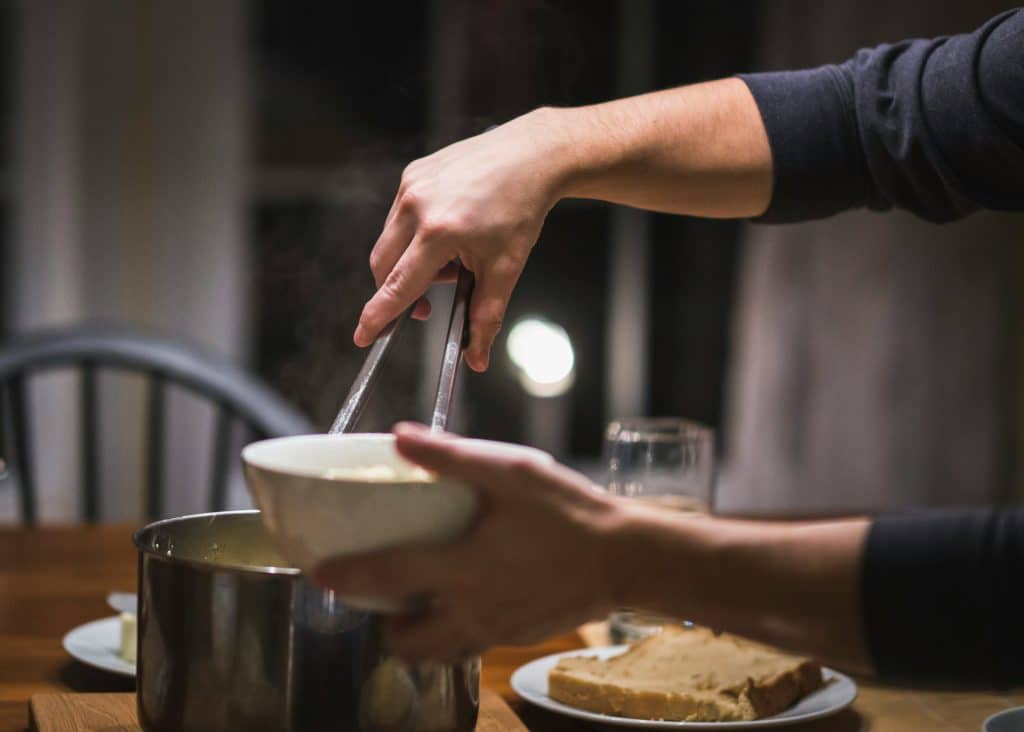
It can be as small as changing the subject to the food on your plate. You can say, “ya comí, gracias,” when someone’s really asking something else, or just let the silence sit there instead of filling it.
I used to think I needed the perfect line. Rehearsed it in the car more times than I want to admit. Most of the time it’s just, “no voy a hablar de eso hoy,” said plain, no explanation owed.
This isn’t about winning. Some days the silence still costs me something, a heavy chest that doesn’t disappear just because I finally have the right words for it. I let it cost me that. It’s still cheaper than performing an explanation nobody actually asked to hear anyway.
The hug ends as soon as it’s done. Commentary from family members who mean well doesn’t end the same way. Sometimes it comes home with you, sits in your chest through the drive back, shows up again three years later when somebody says it a different way at the same table.
You can leave that gathering and still be turning the sentence over in your head three days later, still building your defense for next year, and mija, that’s not you being dramatic. That’s just the weight. It was always heavier than anyone let on.
You get to choose which ones you respond to, which ones you let go. Maybe they sit with you later and you work through them on your own. Maybe you work through them with someone you trust. That part’s yours. Not something the table gets a vote on.
If you don’t have that person yet, someone who already knows the weight and isn’t going to make you explain it from scratch, that’s what circulo is for. Come sit with women who already speak this language.